
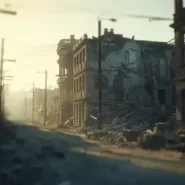
At first, nobody noticed that stories were going missing. There was no big announcement. No sirens. No warning. Just small changes that felt harmless.
The radio stopped playing dramas between the news. Then the library doors were locked for “repairs.” School lessons changed. Literature became Information Training. Teachers stopped asking students what a poem meant and started asking them to memorize definitions.
People were told stories were a distraction. Stories made emotions messy. Stories made people ask questions that had no answers.
Soon, even saying the word story felt strange. Like saying something rude in public.
The government named the law the Narrative Silence Act.
No fiction.
No poems.
No songs about things that were not real.
No bedtime tales.
No movies unless they explained something useful.
Everything had to be direct and practical.
Posters went up everywhere.
Truth only.
Imagination causes problems.
Order is peace.
People learned to talk differently.
“I miss my mother” became “My mother is absent.”
“This place feels lonely” became “There are fewer people here.”
It sounded neat.
It sounded safe.
But it felt empty.
Milo was born into this world.
He was sixteen when he started working at the Archive of Deleted Material. The building was tall and gray and smelled like dust and hot metal. There were no windows. His job was to scan banned objects and send them into the fire pit.
Most of the time it was old books. Diaries. Sketches. Letters with too many feelings in them.
Milo did not understand why, but touching those things made his chest feel tight. Like something inside him wanted to speak but did not know how.
One afternoon, while opening a broken radio, he found a notebook hidden inside.
It was small. Blue. The cover had faded stars. No label. No government stamp.
He should have reported it. Instead, he slid it into his bag. He did not plan it. His hand just moved.
That night, he sat on his bed and opened the notebook. The writing looked alive. Crooked and rushed and human.
The first line said,
Once there was a girl who believed the moon followed her home.
Milo stopped breathing for a second.
He had never seen words like this. It was not giving instructions. It was not explaining facts. It was doing something else. Something gentle and dangerous.
He kept reading.
The girl walked at night and spoke to the moon like it was a quiet animal. She told it when she was scared. She told it when the world felt too loud.
One night, the moon answered her.
Milo’s heart began to pound.
This was illegal. The moon could not talk. That was not real. That was not allowed. But his mind whispered something new.
What if it could?
He read until his eyes hurt.
The next day at work, everything felt wrong.
The walls looked tired. The fire pit looked hungry. The silence felt thick, like it was watching him.
That scared him.
He hid the notebook behind a loose board in his room and kept reading every night.
There were stories about a boy who carried storms in his shoes. A woman who forgot her own name but remembered everyone else’s. A city built from whispers.
They changed how he saw things.
Old people no longer looked slow. They looked full of memories. Children no longer looked quiet. They looked like they were holding songs inside them.
One evening, his neighbor Tomas knocked on the door.
“I heard noise,” Tomas said.
“I was reading,” Milo said.
“Reading what?”
Milo hesitated. Then said, “Something forbidden.”
Tomas stared at him for a long time. Then whispered, “Let me see.”
Milo let him in.
He read the first story aloud.
Tomas cried.
“I forgot this,” he said.
“Forgot what?”
“How it feels to be somewhere else while still here.”
After that, Tomas came again. Then a woman from the laundry place came. Then her sister. They sat on the floor and listened.
They did not call it anything. Names were dangerous.
One night, Lina said, “I remember one.”
She told a story about a river that did not want to move. It wanted to watch the clouds.
The room felt warmer.
Others tried too.
A man spoke about a clock that was tired of time.
A child whispered about a cat that guarded dreams.
Tomas told one about a soldier who planted seeds instead of flags.
They forgot words. They laughed. They cried. They felt alive.
Then the door broke open.
Silence Officers came in.
“You are committing Narrative Crime,” one said.
They took the notebook. They took Tomas. They took Lina.
They burned the book in front of Milo.
The pages curled and blackened.
For weeks after, Milo felt hollow. But stories stayed inside him.
He made new ones in his head. About a city that banned colors. About a boy who hid songs in bread. About a man who carried light in his pockets.
He shared them quietly.
“I heard something once,” he would say.
Some listened. Some walked away. Some smiled.
People began to speak differently again.
“The sun felt heavy today,” someone said, then corrected it quickly.
A child drew a door in the sky.
An old woman hummed a tune with no name.
The world did not fall apart. But something cracked.
One night, Milo stood on the roof and whispered,
Once there was a girl who believed the moon followed her home.
Nothing happened.
But the moon looked closer.
And Milo knew the silence would never fully win.