
I kept the drawing under my mattress. Not because I wanted to keep it. Just because I didn’t know what else to do with it.
Every time I tried to throw it away, I saw that hand. How close it was to my shoulder. How calm Arun’s handwriting looked at the bottom.
“They’re almost here.”
I didn’t sleep properly after that.
Not because I saw the shadow again. I didn’t. The room stayed normal. Too normal. That was the problem. The silence felt louder than noise.
In the mornings, my eyes felt heavy. My head felt slow. My mother kept asking if I was sick. I said no. It was easier than explaining something I didn’t understand myself.
At school, Arun still wasn’t there. His seat stayed empty. Nobody touched his desk. Like we were scared his pencil might start moving by itself.
Some kids said he had been taken somewhere. Some said his house was locked. One boy said he saw police outside it at night, but he also lies a lot, so who knows.
I stopped sitting near the window. Corners still made me uncomfortable. I kept checking behind me without realizing I was doing it.
One afternoon, during math class, I heard the pencil scratching sound. Not the normal kind.
Slow. Careful.
I turned my head.
A new drawing was on Arun’s old desk. Nobody had been sitting there. The paper wasn’t folded. It wasn’t hidden. Just placed there.
My stomach dropped.
I waited until the bell rang and everyone rushed out. Then I went closer. It was a drawing of the hospital.
Not the big city one. The small local one with the peeling paint and the broken sign. In the picture, an ambulance was parked outside. The back doors were open.
A body was inside. The face wasn’t detailed, but I knew who it was.
It was Arun.
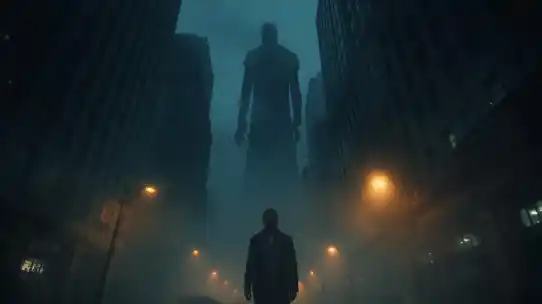
His hair. His thin arms. The way his shoulders slouched even in a drawing. Behind the ambulance, the tall shape stood.
No face.
Watching.
At the bottom of the page, there were no words. Just deep pencil marks, like someone had pressed too hard.
That night, sirens passed our street.
Not fast. Not urgent.
Just slow.
My mother looked out the window. I didn’t.
The next day, people were talking again. Arun had been found near the river, unconscious. They said he collapsed. They said he was breathing, but barely.
He was in the hospital. No one said anything about drawings. No one ever does.
I wanted to go see him. I didn’t know why. Maybe because I was angry. Maybe because I wanted answers. Maybe because the drawings were starting to feel like messages meant only for me.
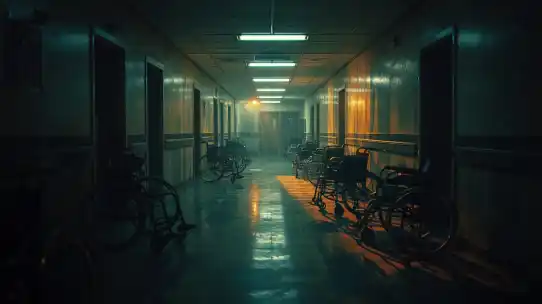
The hospital smelled like medicine and old curtains. The floor felt sticky under my shoes.
Arun was in a small room near the back. Machines were beeping. His eyes were closed. He looked smaller than he did at school.
I stood there for a while, not knowing what to say to someone who never really talked anyway.
Then I noticed his hands. There were pencil marks on his fingers. Dark lines. Like he had been drawing recently.
I leaned closer. There was paper on the table next to his bed. A new drawing.
It showed a room.
My room.
My bed.
My door.
My window.
Everything was in the right place. And this time, the tall shape wasn’t behind me. It was standing over me. Its hand was touching my chest. I stepped back so fast the chair scraped the floor.
Arun’s eyes opened.
Just for a second.
“They’re not patient anymore,” he whispered. Then his eyes closed again. The machine started beeping louder. A nurse came in and told me to leave.
Outside, my hands were shaking. Not the small kind of shaking. The deep kind. Like my bones were nervous.
I walked home instead of taking the bus. The street felt longer than usual. Every shadow looked like it might move.
When I reached my house, the door was unlocked. I always lock it. Inside, everything looked normal. Too normal.
My shoes were where I left them.
The fan was off.
The curtains were still open.
But the air felt wrong. Like the room had been breathing without me. I went to my bedroom. The mattress was slightly moved. Not much. Just enough to notice.
The drawing was gone.
The one I kept under it.
My chest felt tight. On my wall, there was something new. Not a drawing.
Scratches.
Long, thin lines. Not deep enough to break the paint. Just enough to leave marks.
Five lines.
Like fingers.
That night, the power didn’t go out.
The fan didn’t stop.
No tapping.
No footsteps.
Just silence.
Which somehow felt worse.
I sat on my bed with the light on, listening to my own breathing. Around midnight, I heard something soft.
Not outside.
Inside the room.
Like paper moving.
I turned my head.
A new drawing was on my desk. I don’t remember putting it there. It showed my street.
My house.
My window.
And a dark shape halfway through the wall.
Not the door.
Not the window.
The wall.
Under it, a sentence was written.
“Soon.”
I didn’t sleep.
In the morning, my mother said the neighbor’s dog had been found dead.
No wounds.
No blood.
Just lying there.
The same dog that barked every night. The street felt quieter after that.
At school, Arun’s desk was still empty. But there was one more drawing. This one was different. It wasn’t about death.
It was about arrival.
The picture showed our town.
From above.
Like someone was looking down at it. Tall shapes were standing at different corners.
Watching.
Waiting.
And in the middle of the page, written in shaky lines:
“Not just one.”