
After the “Not just one” drawing showed up, people stopped pretending things were normal. They didn’t say it out loud. Nobody ever does. But you could feel it.
Shops closed earlier. Streets felt emptier. Even the dogs stopped barking at night, like they knew noise wasn’t a good idea anymore.
My mother told me not to go out after sunset. She didn’t explain why. She didn’t have to.
I started keeping my light on all night. Not because I thought it would protect me. Just because darkness felt heavier now, like it had weight.
At school, Arun’s desk was still empty. But his drawings weren’t. A new one appeared every few days.
Sometimes on the desk.
Sometimes on the wall.
Once, even inside a closed cupboard.
No one admitted to seeing them appear. They were just… there.
One drawing showed our local shop owner, Uncle Hari, standing behind his counter. The tall shape was behind him.
Two days later, the shop stayed closed. Someone said he locked himself inside and wouldn’t come out.
Another drawing showed the bus stop.
People waiting. One of the shapes standing among them.
That evening, the bus crashed into a pole. No big fire. No movie scene. Just broken glass and screaming. Three people didn’t get up. I stopped counting after that.
Every time I tried to throw the drawings away, they came back. Not the same ones.
New ones.
Closer ones.
My room started feeling smaller. Not physically. Just like the walls were listening.
One night, I heard breathing that wasn’t mine. Slow. Careful. I held my breath to check if it would stop.
It didn’t.
When I turned the light on, nothing was there. But my mirror had fog on it. Like someone had been standing too close.
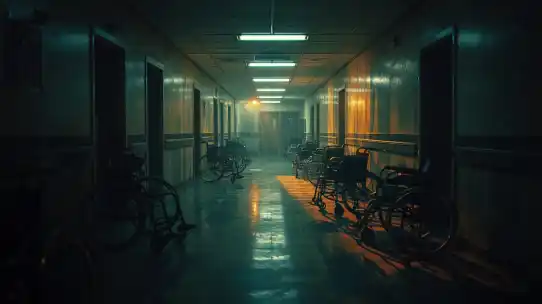
At the hospital, Arun was still unconscious. Machines kept beeping like they were annoyed he wasn’t waking up.
I visited him twice. Both times, there were new pencil marks on his fingers. Both times, new paper on the table.
The last drawing showed a classroom.
Not ours.
Empty chairs.
No teacher.
And tall shapes standing where students should be. At the bottom, it said:
“They don’t need him anymore.”
That sentence stayed in my head longer than it should have. If they didn’t need Arun anymore, why were the drawings still happening.
Why was I still seeing them. Why were they getting closer.
That night, something knocked on my window. Not tapping.
Knocking.
Three slow knocks.
I didn’t move.
The knocking stopped.
When I finally looked, the window was open. I never open it at night. On my desk was a drawing. It showed my house.
Not from outside.
From inside.
From the ceiling.
Like something was watching from above. In the corner of the picture, a tall shape was standing in my room.
Not waiting.
Not watching.
Just standing.
Under it, written in shaky lines:
“Inside already.”
I didn’t sleep.
In the morning, the neighbor’s house was empty. No furniture. No people. No noise. Just open doors and silence.
At school, the drawings stopped showing single people. They started showing groups.
Families.
Classrooms.
Crowds.
Always with the tall shapes mixed in.
Not chasing.
Not attacking.
Just existing.
Like they were settling in. The worst part wasn’t the deaths. It was the quiet.
No screams at night anymore.
No panic.
Just acceptance. Like the town was getting used to being watched.
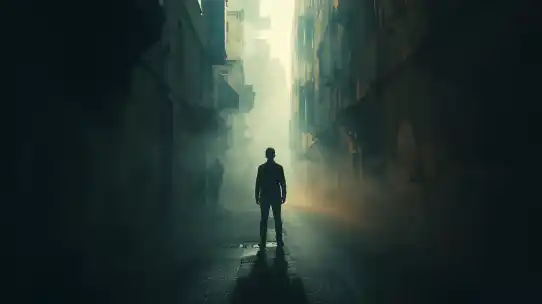
One evening, I saw something I wasn’t supposed to. A tall shape was standing at the end of my street.
Not hiding.
Not fading. Just standing there like it belonged. Cars passed through it. People walked past it. No one reacted.
When it turned its head toward me, my legs locked. I don’t remember getting home. I just remember my door being closed and my light being on.
On my bed was a drawing. It showed me standing in the middle of the street. Surrounded by the tall shapes. They weren’t touching me. They weren’t hurting me. They were just… there.
Under the picture, one sentence:
“You see us now.” That night, something stood outside my door.
Not moving.
Not breathing.
Just waiting. And for the first time, I wasn’t sure if it wanted to kill me. Or if it wanted me to stay.